
Cooling & Quenching
Gas conditioning tower (GCT)
Process cooling and Zero Liquid Discharge (ZLD) with Gas Conditioning Towers (GCT)
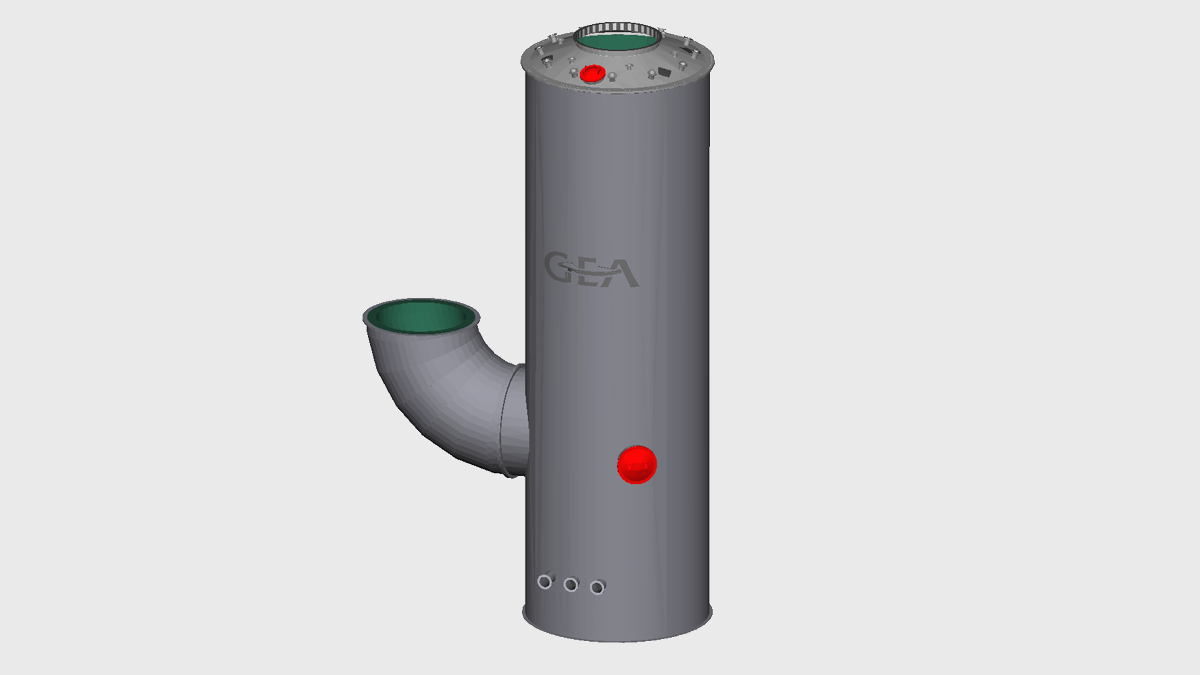
Gas conditioning towers (GCT) are used in industrial applications to cool gases upstream of electrostatic precipitators / bag filters for effective temperature control, gas volume reduction and humidification by the evaporation of water. GEA provide the two available atomization technologies utilized in the evaporative cooling process are hydraulic atomization and twin-fluid atomization. Key parameter for GCT sizing is in addition to the amount of flue gas, inlet and outlet temperature mainly the attainable droplet size and the associated energy consumption.
Key features:
- Low maintenance and low maintenance costs
- Compact design
- Cleaning function available only after a specific deadtime
Working Principle
Working Principle of Gas Conditioning Towers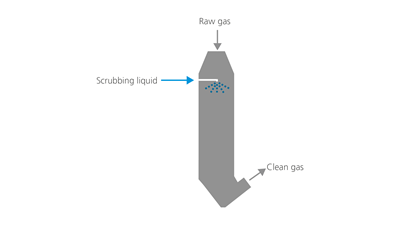
Hydraulic atomization with single fluid, spillback nozzles with larger droplet sizes provide less energy consumption but require a larger casing design and more purity on the cooling water. The amount of liquid injected is adjusted via a control valve in the spillback line, whereby part of the flow is taken from the inlet flow rate and returned to the buffer tank.
Twin fluid technology utilizes compressed air or steam to atomize the water into droplets via a spray injection nozzle/lance as well. The water and compressed air (the two fluids) combine inside the nozzle and exit into the flue gas stream. Smaller droplet sizes lead to smaller casing design and even wastewater can be used for Zero Liquid Discharge (ZLD) where recovered waste heat supports efficient evaporation of water for compliance with wastewater discharge limits.
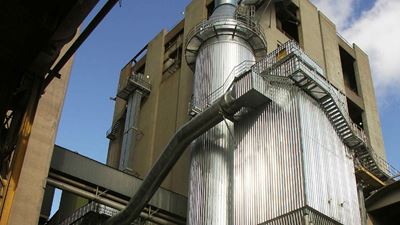
The GCT casing structural design covers full under pressure of ID fan and is providing adequate gas distribution with deflection-, guide- and perforated sheets in the inlet area.
The transport of dust from the housing is taken into account for possible malfunctions with a reversible paddle screw and motor-driven double pendulum flaps on both sides.
Downloads
Produits associés
Systèmes de refroidissement de gaz chauds
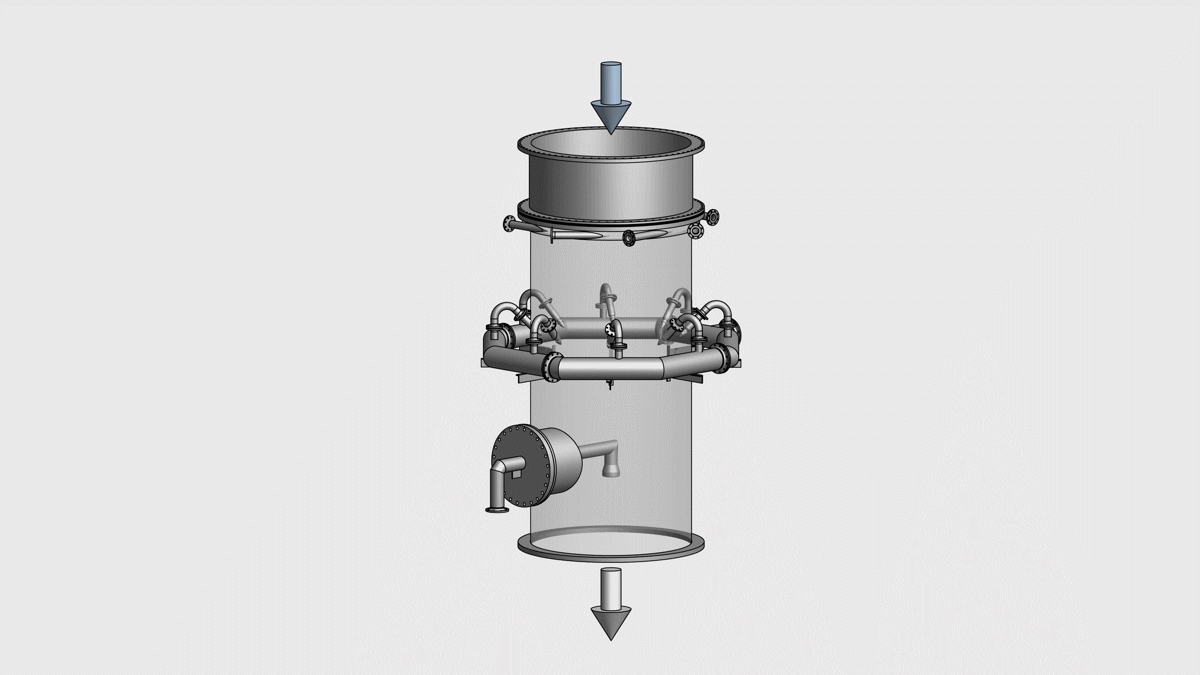
Tube autoportant vertical avec arrivée de gaz par le haut et buses de pulvérisation disposées de manière radiale dans le tube, en dessous de l’arrivée de gaz.
Colonnes de refroidissement
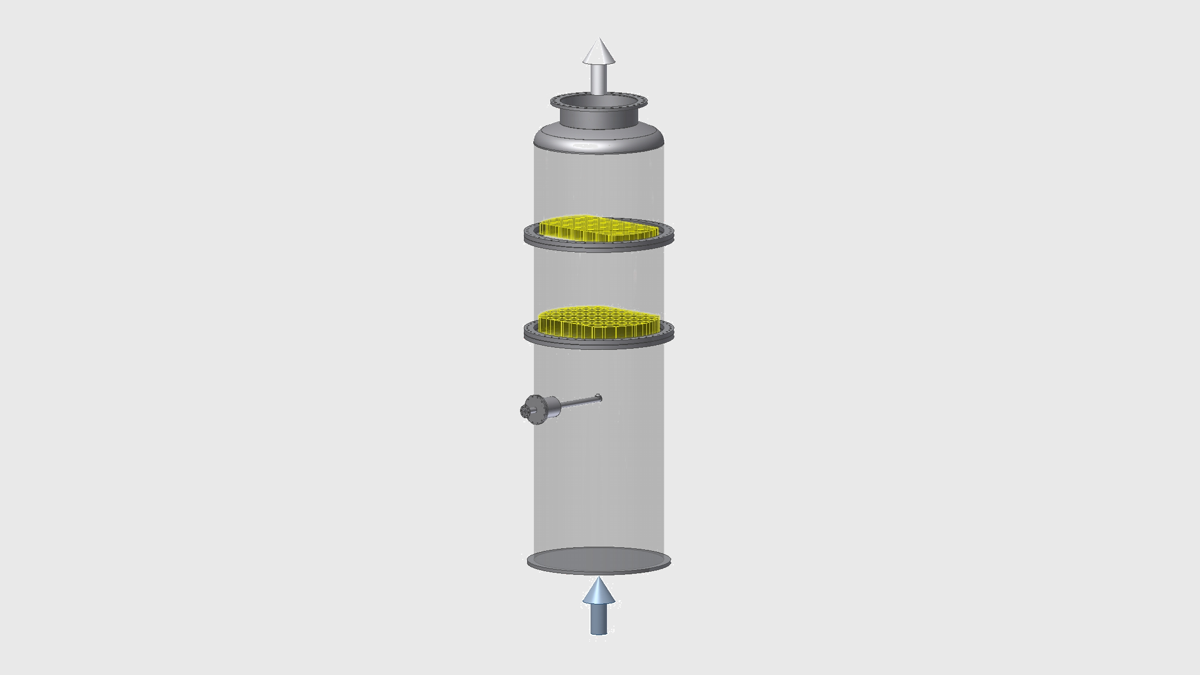
Tube vertical avec arrivée de gaz par le dessous et arrivée radiale du liquide de lavage depuis le haut sur toute la section transversale du tube.
Tour de refroidissement GEA
Le refroidissement rapide ou quenching des flux de gaz est utilisé dans de nombreuses applications essentielles dans les industries de procédés. La sélection et le dimensionnement des buses de pulvérisation sont les décisions les plus délicates lors de la conception d’un système. La conception des tours de refroidissement de GEA consiste en un ba...
GEA Insights

All pharmaceutical freeze-drying vials are the same! Aren't they?
Whether it’s a fad or the future, 100% vial traceability is becoming an increasingly important consideration in the pharmaceutical freeze drying industry. Keeping a close eye on developments is GEA. We’re investigating possible solutions and, what’s more, we have the experience, expertise and know-how to implement them.

Bière sans alcool : Ils en veulent tous – avec moins
Autrefois les expressions « bière sans alcool » et « c’est bon » étaient rarement utilisées ensemble dans la même phrase, en particulier par les consommateurs. Mais depuis les bières à faible teneur en alcool et sans alcool ont fait bien du chemin et nombreuses d’entre elles ont désormais accédé au rang de boissons rafraîchissantes à part entière, et ce, en grande partie grâce à la technologie de GEA.

Innovating patient care with aseptic spray drying
At GEA, our commitment to engineering for a better world fuels our pursuit of innovative solutions that enhance patient care and safety. One of our most promising ventures in recent years is aseptic spray drying – a technology that promises to revolutionize pharmaceutical manufacturing.
