
Liquid Dosage
E.Coli
From oral vaccines to immune-modulators and offering a broad range of applications in biotechnology and pharmaceutical research, development and analysis, bacterial lysates are widely used in the life science industries. Different methods can be used to prepare cell lysates from Escherichia coli (E. coli) cells, for example, including sonication, homogenization, enzymatic lysis and freezing/grinding.
Homogenizers, however, are the most commonly used devices to lyse large quantities of bacteria. A cell suspension is pumped through the minute orifice of a homogenizing valve at high pressure; this is followed by the sudden release of the pressure on the suspension, resulting in an instant expansion that provides the turbulence and liquid shear — combined with the high pressure — that breaks the cells.
The main disruptive factor in this process is the pressure applied to the sample and the subsequent pressure drop across the valve. This provides the impact and the shear stress, making the cells break in proportion to the operating pressure.
Compared with other methods, homogenization is both convenient and efficient, offering higher percentage cell disruption rates. Modern GEA homogenizers are able to work continuously, enabling large quantities of cells to be processed at high operational pressures, which eliminates the need to add deoxyribonuclease (DNase) to the cell suspension.
Suggested pressures for typical applications are 600–1000 bar with a single stage homogenizer; multiple passes (2–3) are generally required to achieve adequate lysis. It should be noted that high processing pressures result in a rise in operating temperatures. Cells should, therefore, be cooled (4 °C) prior to use to avoid inactivating proteins by foaming.
Fermenters, separators, decanters and cross-flow filtration technology for the gentle treatment of fragile cell cultures are also available from GEA. We understand that the careful treatment of living micro-organisms, sterility and efficiency are prerequisites to economical, reliable and efficient processing.
Productos y tecnologías
Mostrar 4 de 9
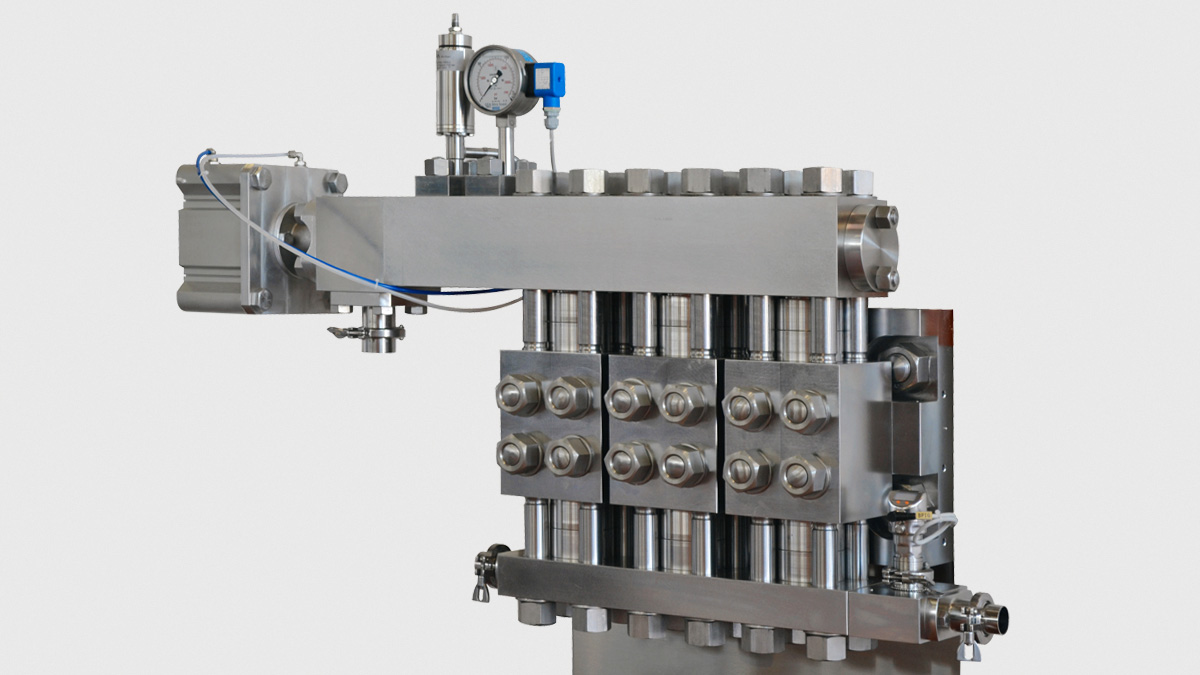
Bloque de compresión del homogeneizador
Los cabezales de compresión de GEA son el elemento central del homogeneizador puesto que bombean el producto a alta presión hasta que fluye por el interior de la válvula de homogeneización y de esta forma activan el proceso de homogeneización.
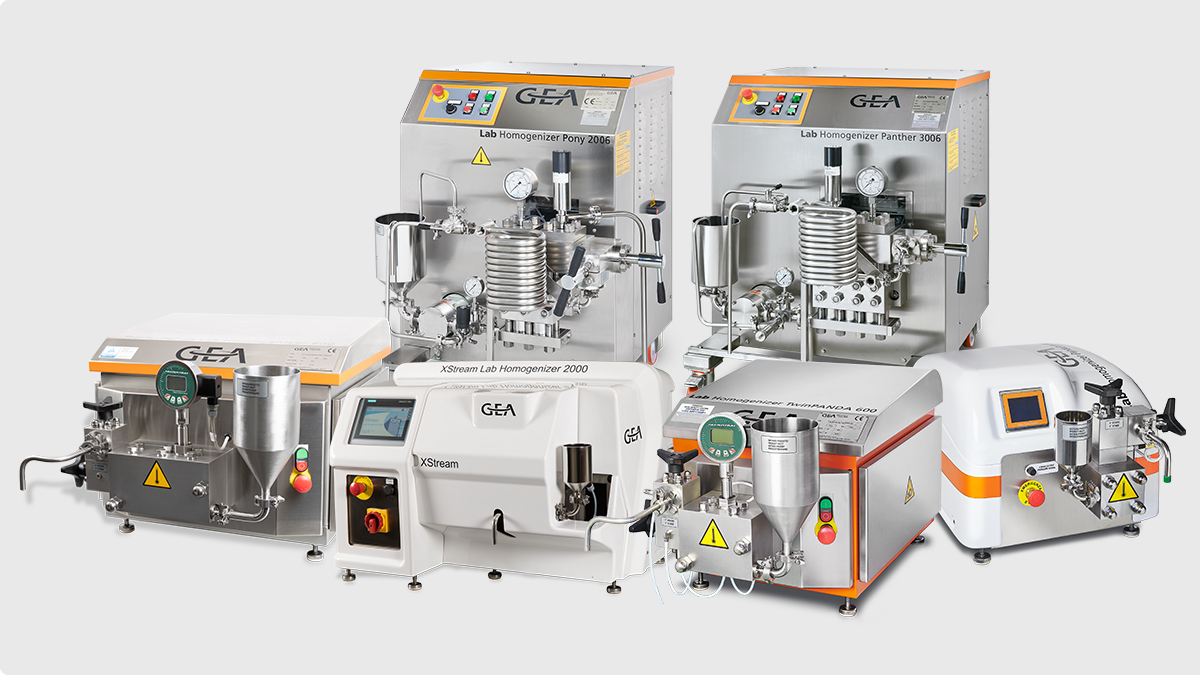
Homogeneizadores de laboratorio
Los homogeneizadores de laboratorio de GEA son equipos pequeños y compactos que permiten comprobar los efectos de la homogeneización en el producto y determinar cuáles son los mejores parámetros del proceso.

Homogeneizadores industriales
Los homogeneizadores industriales de GEA son máquinas que constan de dos elementos fundamentales: un bloque de compresión que permite bombear el producto a alta presión y una válvula de homogeneización capaz de micronizar las partículas dispersas hasta que alcancen el tamaño de micrómetros y nanómetros, dependiendo de las características del prod...

Homogeneizadores modulares
Durante un tiempo, GEA ha sido referente en homogeneizadores que funcionan a muy alta presión (VHP) para aplicaciones farmacéuticas y biotecnológicas. Nuestra gama incluye desde máquinas de laboratorio de mesa hasta el diseño y la fabricación en nuestras instalaciones de plantas piloto y fabricación de sistemas montados en plataforma para lisis c...
Downloads
GEA Insights

All pharmaceutical freeze-drying vials are the same! Aren't they?
Whether it’s a fad or the future, 100% vial traceability is becoming an increasingly important consideration in the pharmaceutical freeze drying industry. Keeping a close eye on developments is GEA. We’re investigating possible solutions and, what’s more, we have the experience, expertise and know-how to implement them.

Cerveza sin alcohol: Lo quieren todo pero quieren menos
Hubo un tiempo en que nunca se mencionaban juntas la ‘cerveza sin alcohol’ y las ‘comidas sabrosas’, particularmente por los propios consumidores. Pero las cervezas de baja graduación alcohólica y sin alcohol han recorrido un largo camino —ahora muchas de ellas son refrescos de pleno derecho— gracias en última instancia a la tecnología de GEA.

Innovating patient care with aseptic spray drying
At GEA, our commitment to engineering for a better world fuels our pursuit of innovative solutions that enhance patient care and safety. One of our most promising ventures in recent years is aseptic spray drying – a technology that promises to revolutionize pharmaceutical manufacturing.

