
Liquid Dosage
E.Coli
From oral vaccines to immune-modulators and offering a broad range of applications in biotechnology and pharmaceutical research, development and analysis, bacterial lysates are widely used in the life science industries. Different methods can be used to prepare cell lysates from Escherichia coli (E. coli) cells, for example, including sonication, homogenization, enzymatic lysis and freezing/grinding.
Homogenizers, however, are the most commonly used devices to lyse large quantities of bacteria. A cell suspension is pumped through the minute orifice of a homogenizing valve at high pressure; this is followed by the sudden release of the pressure on the suspension, resulting in an instant expansion that provides the turbulence and liquid shear — combined with the high pressure — that breaks the cells.
The main disruptive factor in this process is the pressure applied to the sample and the subsequent pressure drop across the valve. This provides the impact and the shear stress, making the cells break in proportion to the operating pressure.
Compared with other methods, homogenization is both convenient and efficient, offering higher percentage cell disruption rates. Modern GEA homogenizers are able to work continuously, enabling large quantities of cells to be processed at high operational pressures, which eliminates the need to add deoxyribonuclease (DNase) to the cell suspension.
Suggested pressures for typical applications are 600–1000 bar with a single stage homogenizer; multiple passes (2–3) are generally required to achieve adequate lysis. It should be noted that high processing pressures result in a rise in operating temperatures. Cells should, therefore, be cooled (4 °C) prior to use to avoid inactivating proteins by foaming.
Fermenters, separators, decanters and cross-flow filtration technology for the gentle treatment of fragile cell cultures are also available from GEA. We understand that the careful treatment of living micro-organisms, sterility and efficiency are prerequisites to economical, reliable and efficient processing.
Produtos e Tecnologias
Mostrando 4 de 9
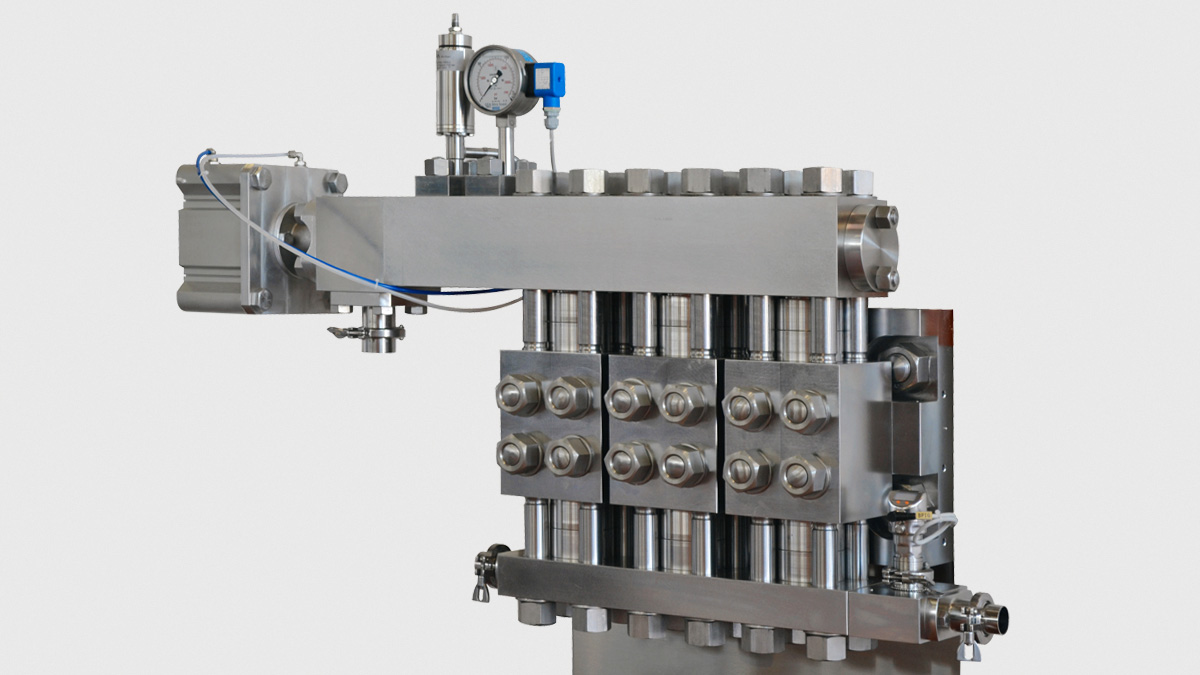
Bloco de compressão homogeneizador
As cabeças de compressão da GEA são o centro pulsante do homogeneizador, pois podem ativar o processo de homogeneização, bombeando o produto em alta pressão até que ele flua dentro da válvula de homogeneização.

Homogeneizadores industriais
Os homogeneizadores industriais da GEA são máquinas formadas por dois elementos essenciais: um bloco de compressão, que permite bombear o produto em alta pressão e uma válvula de homogeneização, capazes de micronizar as partículas dispersas para a ordem de micrômetros e nanômetros, dependendo das características do produto e dos resultados deseja...
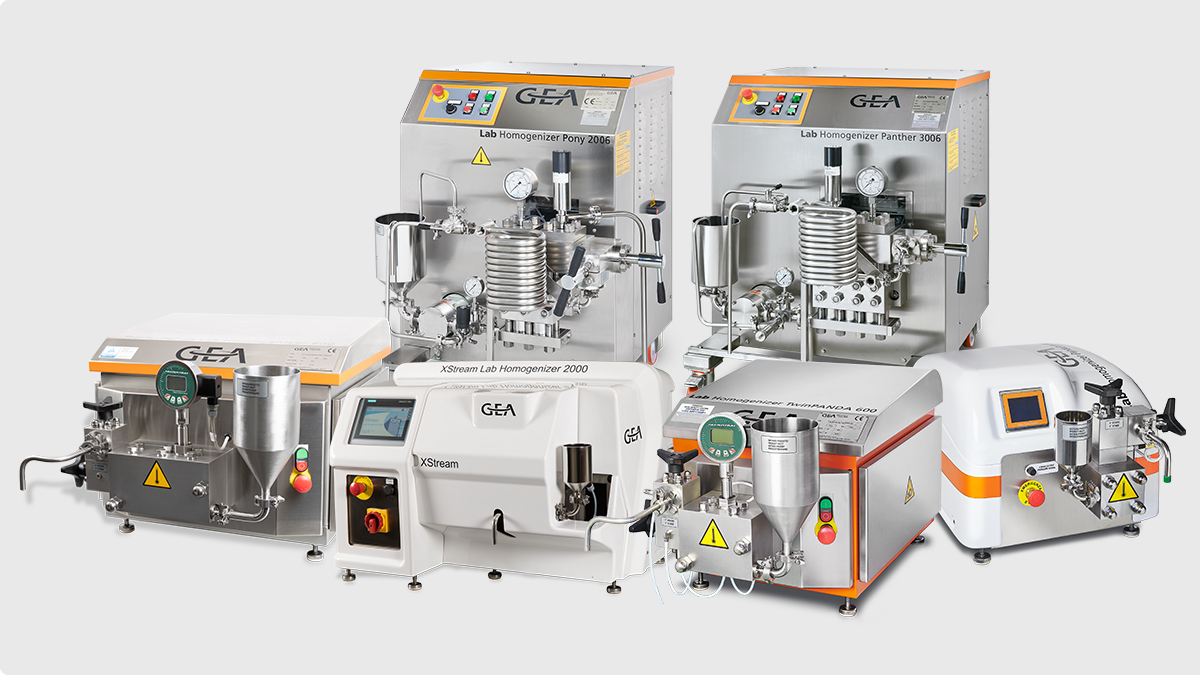
Homogeneizadores laboratoriais
Os homogeneizadores de laboratório da GEA, pequenos e compactos, permitem testar os efeitos da homogeneização no produto e avaliar quais são os melhores parâmetros de processo.

Homogeneizadores montados sobre plataformas
Já por algum tempo a GEA estabelece o padrão para as unidades do homogenizador de alta pressão (VHP) para aplicações farmacêuticas e de biotecnologia. Nosso objetivo de fornecimento vai de máquinas de bancada de laboratório a projeto in-house e fabricação em escala piloto e sistemas integrados para produção de ruptura celular e aplicações de red...
Downloads
Insights da GEA
All pharmaceutical freeze-drying vials are the same! Aren't they?
Whether it’s a fad or the future, 100% vial traceability is becoming an increasingly important consideration in the pharmaceutical freeze drying industry. Keeping a close eye on developments is GEA. We’re investigating possible solutions and, what’s more, we have the experience, expertise and know-how to implement them.

Cerveja sem álcool: Eles querem tudo - eles querem menos
Houve um tempo em que as frases "cerveja sem álcool" e "bom sabor" raramente eram usadas juntas na mesma frase, particularmente pelos consumidores. Mas as cervejas sem álcool e de baixo teor de álcool percorreram um longo caminho - muitas delas agora são bebidas refrescantes por direito próprio - graças, em grande parte, à tecnologia da GEA.

Innovating patient care with aseptic spray drying
At GEA, our commitment to engineering for a better world fuels our pursuit of innovative solutions that enhance patient care and safety. One of our most promising ventures in recent years is aseptic spray drying – a technology that promises to revolutionize pharmaceutical manufacturing.

