
Liquid Dosage
Inhalable Suspension
Inhalation is often the preferred drug delivery method for lung diseases, offering a number of advantages for both patients and medical professionals for the administration of vaccines and other biological drugs.
The active ingredient of many inhalable products, such as anti-asthma medications, acts on the muscle cells of the pulmonary airways. Such medications can be rendered inefficient, however, if particles aggregate in the inhaler. In addition, to prevent dry powder aerosols from depositing particulate matter in the oropharyngeal cavity — and in the inhaler — dispensed particles should have a geometric diameter of 1–3 µm and a mass density of approximately 1 g/cm3.
Inhaled drugs are usually dissolved in an aqueous system, such as an isotonic salt solution, and aerosolized at a high pressure to obtain nebulized particles. The liquid solution is pumped through a homogenizing valve at 500–1000 bar, using a single stage process, during which semi-solid particles become dispersed in the liquid.
The high-pressure homogenization enables the size reduction of average to large particles and makes the suspension more stable as a result of the decreased sedimentation rate. Moreover, it eliminates biological risk and provides better tolerance to irritants, as well as improving the clarity and transparency of the processed product.
In addition to a comprehensive range of homogenizers, GEA also offers production-scale mixing, blending, spray drying and micronization solutions for the manufacture of inhalable products, plus an unparalleled level of expertise in the design and layout of suitable plant: from vessel size dimensions to valves and 3D P&IDs, and from R&D to full-scale production.
Produtos e Tecnologias
Mostrando 4 de 14
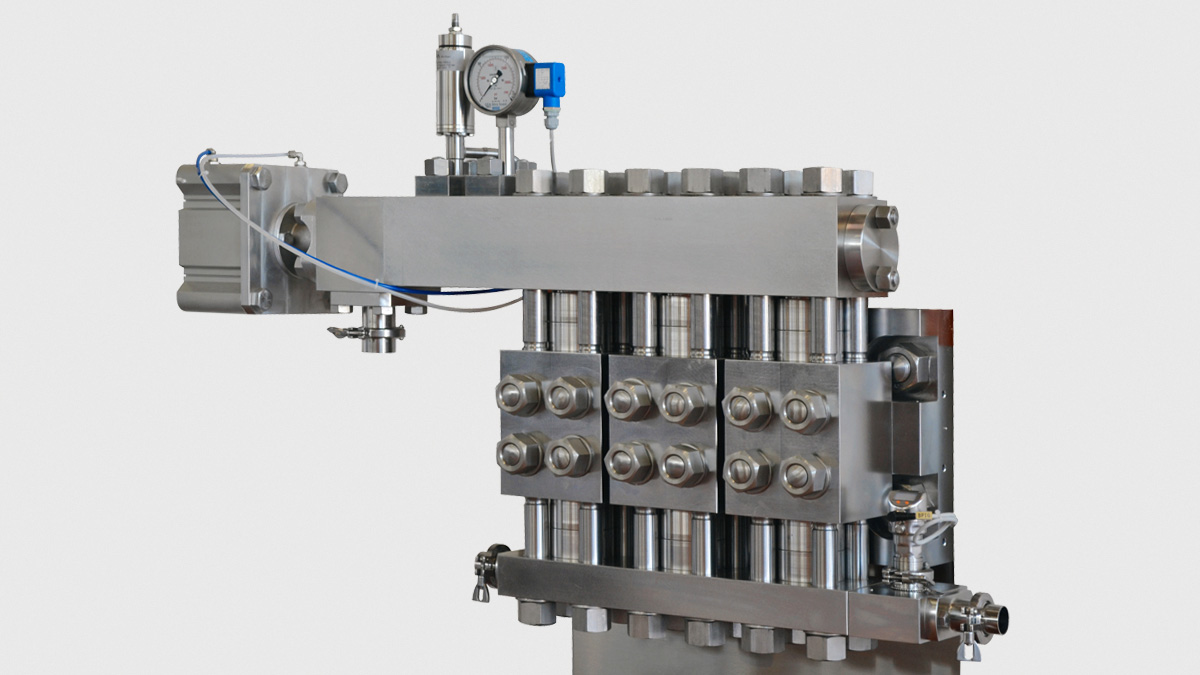
Bloco de compressão homogeneizador
As cabeças de compressão da GEA são o centro pulsante do homogeneizador, pois podem ativar o processo de homogeneização, bombeando o produto em alta pressão até que ele flua dentro da válvula de homogeneização.
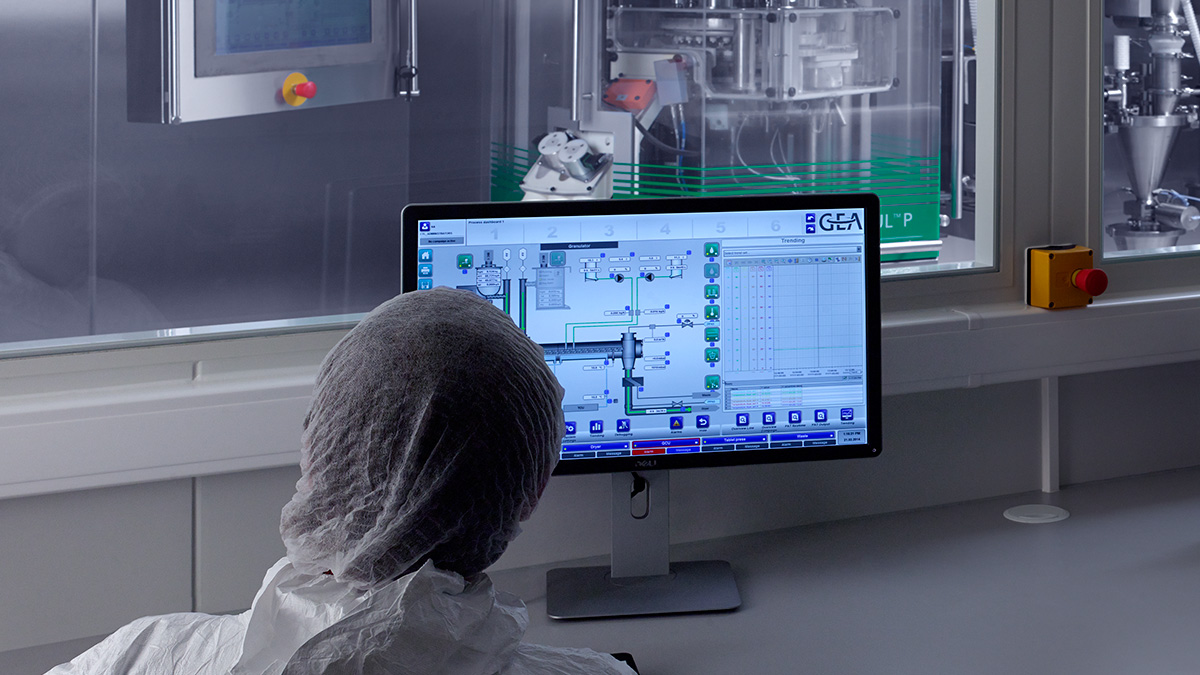
Dispositivos analíticos, de controle em linha e de medição
Combinar o processo de monitoramento usando analisadores on-line, juntamente com princípios de engenharia de processo sólidos e técnicas de modelização de processo avançadas permitirá que os processos sejam ativamente controlados de modo a compensar as variações de entrada.

Homogeneizadores industriais
Os homogeneizadores industriais da GEA são máquinas formadas por dois elementos essenciais: um bloco de compressão, que permite bombear o produto em alta pressão e uma válvula de homogeneização, capazes de micronizar as partículas dispersas para a ordem de micrômetros e nanômetros, dependendo das características do produto e dos resultados deseja...
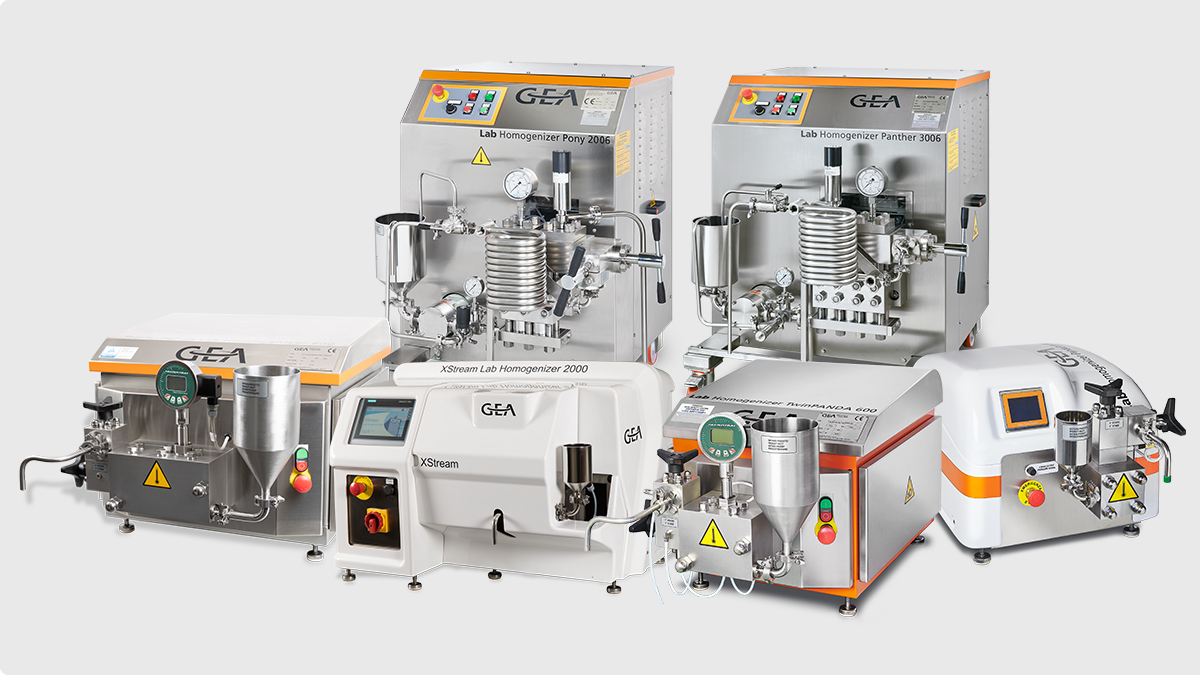
Homogeneizadores laboratoriais
Os homogeneizadores de laboratório da GEA, pequenos e compactos, permitem testar os efeitos da homogeneização no produto e avaliar quais são os melhores parâmetros de processo.
Downloads
Insights da GEA

All pharmaceutical freeze-drying vials are the same! Aren't they?
Whether it’s a fad or the future, 100% vial traceability is becoming an increasingly important consideration in the pharmaceutical freeze drying industry. Keeping a close eye on developments is GEA. We’re investigating possible solutions and, what’s more, we have the experience, expertise and know-how to implement them.

Cerveja sem álcool: Eles querem tudo - eles querem menos
Houve um tempo em que as frases "cerveja sem álcool" e "bom sabor" raramente eram usadas juntas na mesma frase, particularmente pelos consumidores. Mas as cervejas sem álcool e de baixo teor de álcool percorreram um longo caminho - muitas delas agora são bebidas refrescantes por direito próprio - graças, em grande parte, à tecnologia da GEA.

Innovating patient care with aseptic spray drying
At GEA, our commitment to engineering for a better world fuels our pursuit of innovative solutions that enhance patient care and safety. One of our most promising ventures in recent years is aseptic spray drying – a technology that promises to revolutionize pharmaceutical manufacturing.

