
Liquid Dosage
Therapeutical Proteins
Protein-based therapeutics are increasingly being developed as new chemical entities in the pharmaceutical and life science industries. Unlike small molecules, which are typically synthesized using chemical processes, most proteins need to be processed in living systems, mostly by recombinant DNA technology. The proteins can then be produced in their functional form (quaternary structure), rather than by microbial biosynthesis (bacteria/yeast), substantially reducing the downstream stages of the process.
The GEA Advantage
As the demand for large-volume products increases, so does the requirement for higher capacity reactors (up to 20,000 L) to realize economies of scale. GEA has responded to the changing needs of biopharmaceutical manufacturers and developed improved technology solutions to optimize both upstream and, with increasing titers, downstream processing, in terms of time and cost efficiency.
Based on its history of innovation and process development, GEA has a thorough working knowledge of therapeutic protein production and has used this competence to design better media and feeding strategies, optimize the fermentation stage and enhance physicochemical conditions during the manufacturing process.
A leading international supplier of integrated process systems, our extensive portfolio of products, technologies and services includes standard and customized fermenters, separators and entire production lines, as well as plant for the production, storage and distribution of clean utilities. Systems for the preparation of media, fluid management, cell cultivation and purification are also part of our global scope of supply.
As a competent manufacturer of complete plant for the life science industries, GEA is a full-service provider of solutions that meet your exact requirements and specifications. From planning, development and installation to qualification and maintenance, our experienced engineers will collaborate with your project team to supply innovative and efficient process solutions for your applications.
Produits et technologies
Affichage de 4 sur 12
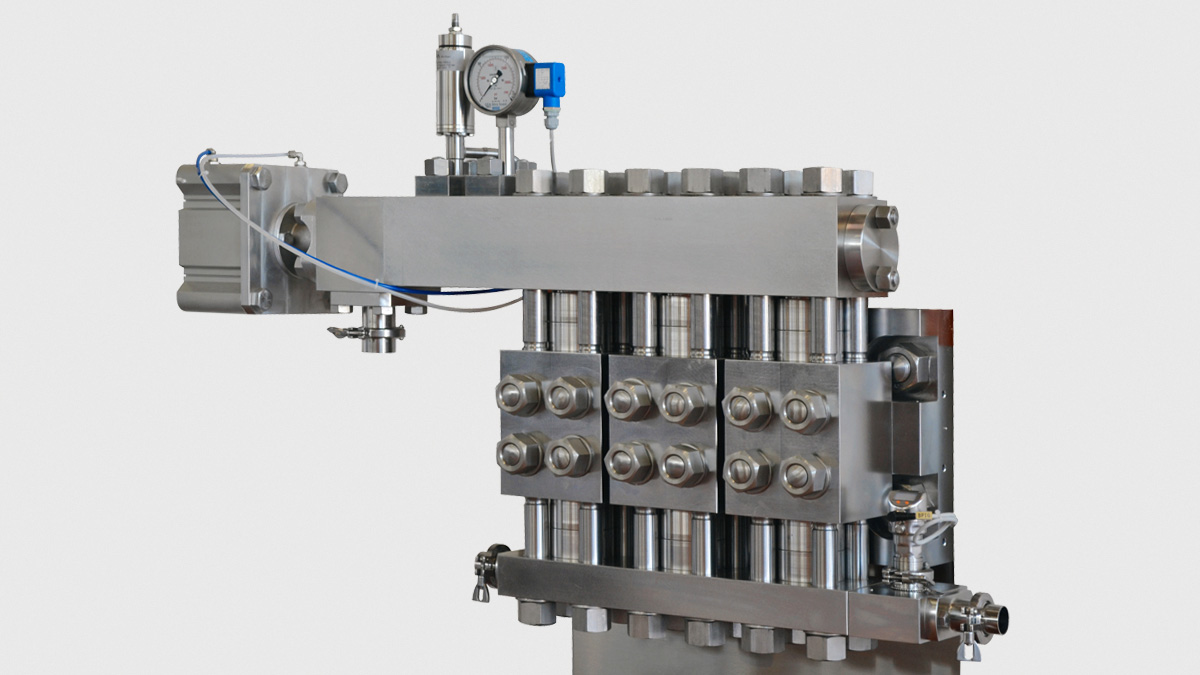
Bloc de compression pour homogénéisateur
Les têtes de compression de GEA constituent le cœur des homogénéisateurs, car elles activent le processus d'homogénéisation en pompant le produit à haute pression jusqu'à ce qu'il s'écoule dans la vanne d'homogénéisation.
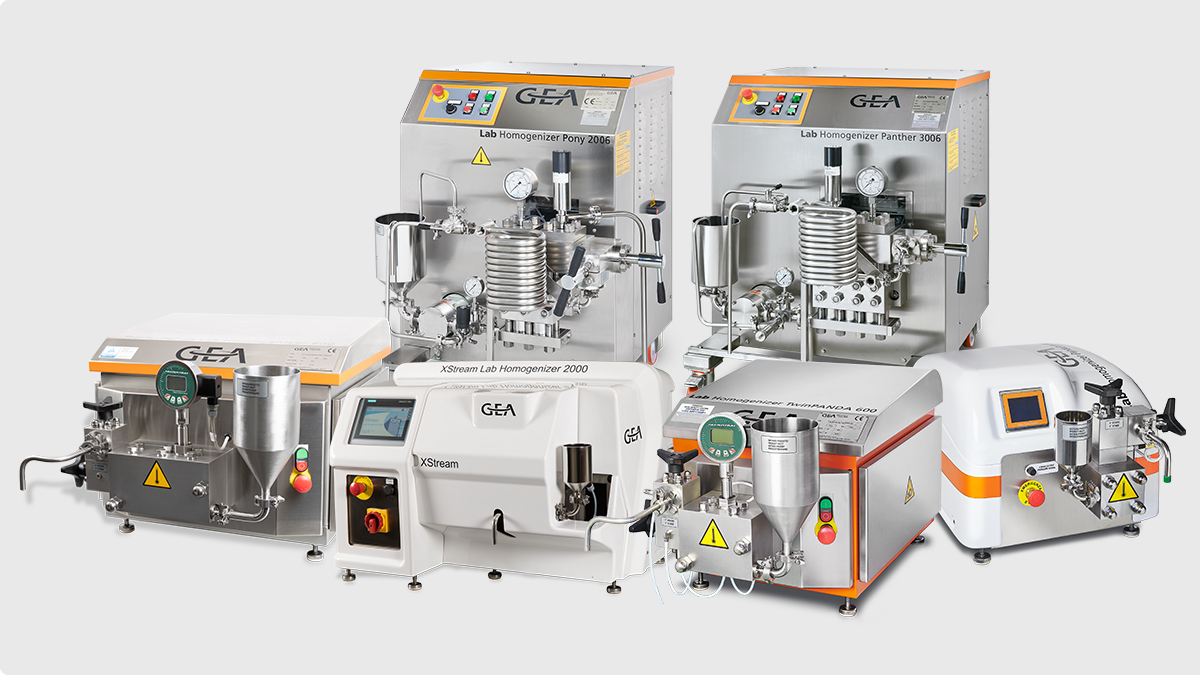
Homogénéisateurs de laboratoire
Les homogénéisateurs de laboratoire de GEA sont de petite taille et compacts. Ils permettent de tester les effets de l'homogénéisation sur le produit et d'évaluer les meilleurs paramètres de process.

Homogénéisateurs industriels
Les homogénéisateurs industriels de GEA sont constitués de deux éléments essentiels : un bloc de compression, qui permet de pomper le produit à haute pression, et une vanne d'homogénéisation qui micronise les particules dispersées de l'ordre des micromètres et des nanomètres, selon les caractéristiques du produit à obtenir et selon les résultats ...

Homogénéisateurs sur skid
Depuis quelques temps, GEA a poussé plus loin les limites des unités d'homogénéisation à très haute pression (THP) pour les applications pharmaceutiques et biotechnologiques. Notre gamme compte des machines de laboratoire pour banc de travail, pour la conception et la fabrication interne de prototypes, mais aussi des systèmes de production m...
Downloads
GEA Insights

All pharmaceutical freeze-drying vials are the same! Aren't they?
Whether it’s a fad or the future, 100% vial traceability is becoming an increasingly important consideration in the pharmaceutical freeze drying industry. Keeping a close eye on developments is GEA. We’re investigating possible solutions and, what’s more, we have the experience, expertise and know-how to implement them.

Bière sans alcool : Ils en veulent tous – avec moins
Autrefois les expressions « bière sans alcool » et « c’est bon » étaient rarement utilisées ensemble dans la même phrase, en particulier par les consommateurs. Mais depuis les bières à faible teneur en alcool et sans alcool ont fait bien du chemin et nombreuses d’entre elles ont désormais accédé au rang de boissons rafraîchissantes à part entière, et ce, en grande partie grâce à la technologie de GEA.

Innovating patient care with aseptic spray drying
At GEA, our commitment to engineering for a better world fuels our pursuit of innovative solutions that enhance patient care and safety. One of our most promising ventures in recent years is aseptic spray drying – a technology that promises to revolutionize pharmaceutical manufacturing.
